How to Visit Berlin - Ichthyosaur Historic State Park
If you love ghost towns and dinosaurs then you need to head out to this little known town in Nevada’s expansive catalogue of State Parks. Berlin-Icthyosaur (say that 10 times fast) is located
If you love ghost towns and dinosaurs then you need to head out to this little known town in Nevada’s expansive catalogue of State Parks. Berlin-Icthyosaur (say that 10 times fast) is located just outside the (very) small town of Gabbs, NV. It has been dubbed as the, “Bodie”, of Nevada and not only contains remnants of an old mining town (Berlin), but it’s also the site of some of the largest Ichthyosaur fossils ever discovered.
Berlin can be a difficult park to find as it is tucked away deep into the Shoshone Mountain Range and doesn’t receive a lot of publicity as some of the other state parks, but it is more than worthy of your efforts to get out and explore it. So read on and discover how you too can visit Berlin-Ichthyosaur State Park.
How to Get There
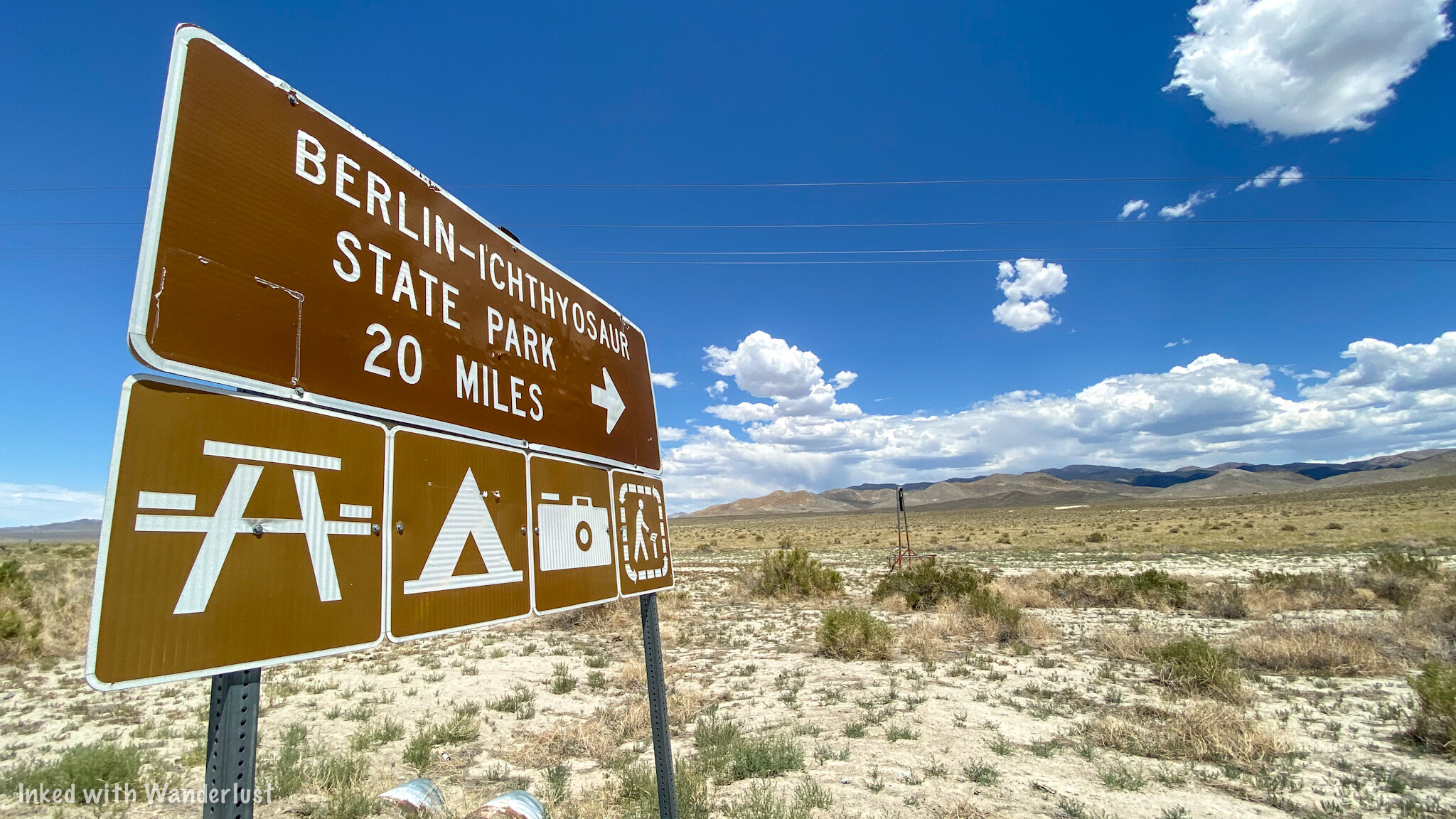
Berlin-Ichthyosaur State Park sign.
As stated above, Berlin is a bit out of the way and takes some effort to get to from either direction. It is located in Nye County and the nearest anything to it is the small, unincorporated town of Gabbs (population 155 as of this writing). If you’re coming from:
Reno: Take I-80 east towards Fernley. You’ll then take U.S 50 east for about 70 miles before turning right onto highway 361 and follow that for about 35 miles before finally arriving in Gabbs. From this direction, you’ll take a left on NV-844 east for 16 miles. This road will take you directly to Berlin.
Las Vegas: Make your way to U.S 95 north and follow that for roughly 215 miles. You’ll then veer right onto Route 89 to Gabbs and once there, you’ll follow the same directions above. The only difference is you’ll turn right on NV-844 to the park.
Salt Lake City: You’ll get onto I-80 west and follow that for 300 miles. You’ll then take the exit for NV-305 south heading for the town of Austin. Once in Austin, you’ll briefly turn left on the Lincoln Highway before exiting to NV-722 (you’ll pass the Austin airport). Then, turn left on NV-21 before turning right onto Forrest Developed Road 024 (this will be the back way into Berlin).

Berlin-Ichthyosaur State Park entrance.
As you can see, no matter which direction you are coming from, it’s going to be an adventure just getting to Berlin. So whichever way you’re coming from, be sure to stop at one of the bigger towns and fuel up before arriving in Gabbs or Berlin as there are no services in either. It also wouldn’t hurt to make sure your tires are properly inflated and all your fluids are good.
With the exception of the final few miles and coming in through the back way, all roads leading to Berlin are paved and well maintained. The last stretch is on a maintained gravel road. My Chevrolet Cruze made it up there perfectly fine. Potholes and dips were minimal. Keep in mind that if you’re using GPS, it may or may not have you go right at the split. Don’t. Keep to the left road and that will take you straight to the main entrance.
The Fossil House

The Fossil House.
It’s totally up to you on where you want to start. Once you’ve paid your entry fee, you’re free to enjoy the park at your leisure. However, we visited during the covid-19 crisis and one of the ways they were trying to prevent the spread at this particular location was to close the Fossil House. Thankfully, we were one of only two cars that came through this day so the Ranger was kind enough to open it up for us to check out. So we started our day here.
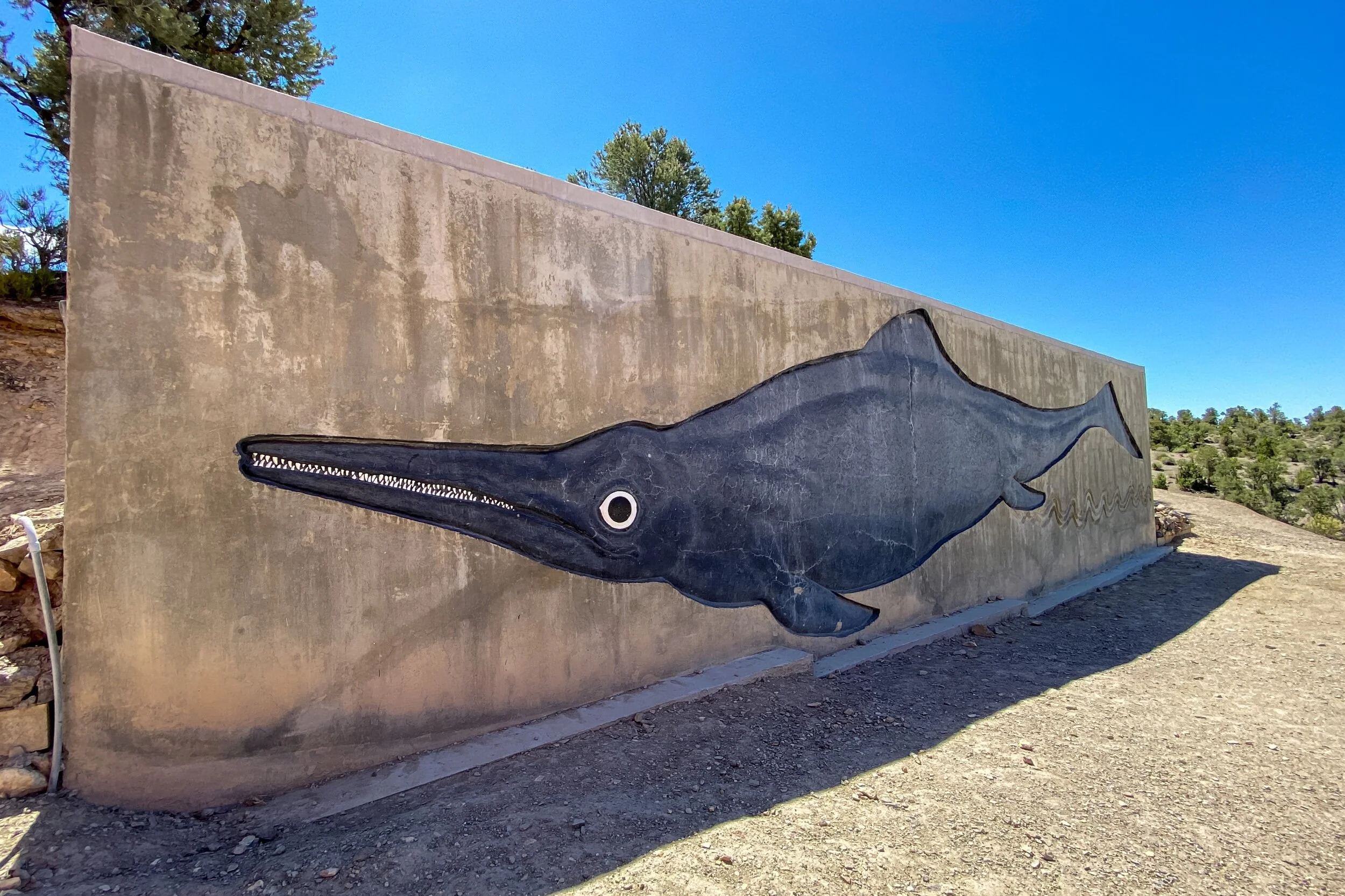
To get to the Fossil House, simply stick to the main road. You’ll eventually pass by the campground and will see a narrow road on your right with a sign pointing the way. Take this road. Be warned, this road is VERY narrow and there isn’t a whole lot of room for two vehicles to pass each other. At the top of the hill, you’ll come to the road’s terminus at the parking lot for the Fossil House. You’ll see a giant mural of an Ichthyosaur to the right of the lot to make it fairly obvious that you’re in the right spot. This mural represents the actual size of the largest, intact fossil inside the house.

Mural of an actual sized Ichthyosaur.
As you can see from the above photo, Ichthyosaurs were known to get huge. Some coming in at over fifty feet in length. The fossils found at this location were discovered in 1928 with excavations beginning in 1954 and running through the 1960’s. After it was all said and done, there were 40 near-complete Ichthyosaurs found at various locations throughout the park.
Tours of the Fossil House are 40 minutes in length and offered during the following times:
Daily, Memorial Day through Labor Day at 10am and 2pm with an additional noon tour offered on Saturdays and Sundays.
From March to Memorial Day and Labor Day to late November, there is no noon tour.
FOR THE REMAINDER OF 2020 AND UNTIL FURTHER NOTICE, TOURS OF THE FOSSIL HOUSE ARE CANCELED! I will update this once official information from park officials are provided. There are viewing windows at the Fossil House that you are free to use.
There is a fee to take this tour. It is $5.00 per person while kids 12 and under are free.

The excavation site inside the fossil house at Berlin State Park.
Inside the Fossil House, there’s a small loop trail and takes you around the excavation site with actual fossils in the middle of it. There are numbered, white markers next to certain sections of the fossil that explain which part of the Ichthyosaur you’re looking at. At first, it won’t make any sense but eventually you’ll see it and that “ah hah” moment will hit you.
I’m grateful to the Ranger that opened the house and allowed us to explore it at our leisure. Normally, as stated above, this is part of a tour. The Ranger gave us the booklet he uses during the tour that matches up to the markers on the fossils and explains everything. Once we were done, we chatted with him a bit and then left to explore Berlin proper.
To the Ranger that did this for us; If you’re reading this, thank you so much.
Berlin: A True Nevada Ghost Town

Berlin-Ichthyosaur State Park.
Once we got our fill of Ichthyosaurs, it was now time to explore the ghost town portion of the park. We drove back down to the town proper and found a small parking space near the visitor center and flag pole. In case you’re here during a particularly busy day, just know that parking can be a little scarce here. You may have to get creative.
Berlin was a true, turn-of-the-century mining town. The height of its peak ran from 1898 to its death in 1911. However, mining activity began in the area as early as 1863 when silver was discovered in Union Canyon resulting in the formation of the Union Mining District and included the towns of Berlin, Grantsville, Ione, and of course, Union. A few years later in 1896, the Berlin Mine was established.
By the time mining concluded in 1911, the estimated total production of Berlin was $849,000 with a price of $20 per ounce of gold. Around 250 people including Miners, Wood-Cutters, Charcoal Makers, a Doctor, Nurse, Forest Ranger, and Prostitute made up the town. The cool thing about this abandoned town is that not some, but MOST of the original buildings are still standing and there are even some original residents still buried in the town cemetery.
Here are a few of the highlights you’re able to check out on this self-guided tour:

The Machine Shop
This was what we know now to be a Maintenance Shop. Here, Blacksmiths and Mechanics worked to keep the machinery of the mine in working order.
Every so often, a passer-by would have his vehicle towed here to be worked on after breaking down.

The Assay Office
Here, samples of rock, ore, and concentrates from the mill would be sent for processing (assayed) to determine the values they contained.
The furnace used charcoal because it was the only clean burning fuel available locally. The night watchmen would use this office to keep warm and eat their meals.
The Stage Station
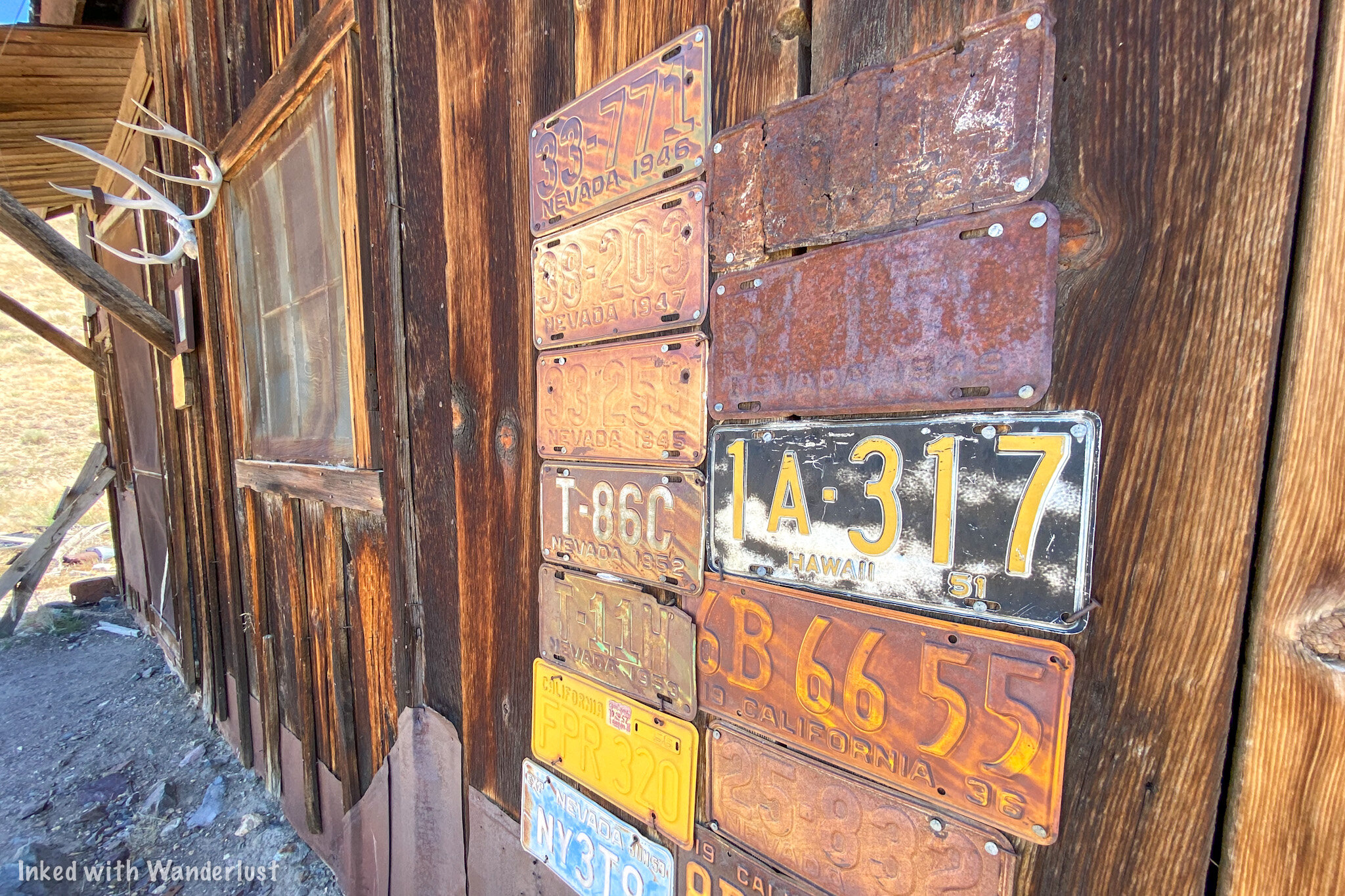
This is where the stage driver and his horse would live…together. A partition inside separated the living quarters from the barn section of the building.
The men who drove stage during this time was John Mullin, Ed Dieringer, and Alex Dyer.

Company Store
There’s nothing much left now, but this was once the site of the company store. Here, they sold everything from mining equipment, clothing, groceries, and drugs to locals and workers.
During labor troubles in 1905, the store also served as a jail. The building you see in the background was a storage warehouse.

Superintendent Home
This was the home of the mine’s superintendent and now serves as a small welcome center.
During a labor strike in 1907 when the miners wanted a raise from $3.50 to $4.00 per day Mr. Bowen, the Super, shut the mine down.
To counter, the miners teamed up and forcefully escorted Mr. Bowen off property. He then drove to the town of Tonopah and brought back a Sheriff to help re-gain control.

The Berlin Mill
During the heyday of Berlin’s production, you’d see a beehive of activity here.
One man would be operating the crusher, another tended the 30 stamps and concentration tables, while another looked after the boilers and steam engines.
This is by no means an exhaustive list of features found in Berlin. Other cool things to check out include the town cemetery, mine foreman’s house, miner’s dugout, entrance to the Berlin mine, doctor’s house, and more! As you can see, you could easily spend a full day or more checking everything out in Berlin.
Lodging & Fees

The nearest hotels and/or Airbnb’s you’ll find are in the bigger towns nearby. These include Fallon, Austin, and Hawthorne. If you want to stay in the park, they have an established campground you could utilize. It contains 14 well-spaced units, some being able to accommodate RV’s up to 25 feet long. Each unit comes with a fire pit, BBQ grills, covered picnic tables, and drinking water (outside of winter). Restrooms and an RV dump station are located nearby.
The fee to camp is $15.00 per night with a 14 night maximum (30-day window). Keep in mind that this per night fee is in addition to your entry fees which are:
$5.00 per vehicle
$2.00 per bike (motorcycle)
When you arrive, someone may or may not be at the gate collecting entry fees. We arrived just before the Ranger was about to take off so he was kind enough to take our money and fill out the envelope for us. If there is no one there, simply stop at the gate to fill in the envelope and drop it into the red deposit pole (with your fee included, of course). Much like most Nevada State Parks, only cash is accepted for entry fees.
There are also no restaurants or vending machines in the park. So be sure to bring snacks and water with you. There is one restaurant in Gabbs (the gateway town to Berlin). It is called, “R&D’s Bar”, and serves up burgers, fries, hot dogs, chicken wings, and similar fare. Aside from that, you’ll need to get to the bigger towns listed above.
Directly adjacent to the pay station at the main entrance is a restroom of the pit toilet variety. I must admit that of all State and National Parks I’ve been to, Berlin had THE cleanest restroom of its kind. There is another restroom located near the campground.




Conclusion

Berlin Mill. Berlin-Ichthyosaur State Park.
Berlin is perhaps Nevada’s most intriguing and unique state park. The combination of an abandoned mining town and the discovery of a massive amount of Ichthyosaur fossils should put Berlin at or near the top of any traveler’s list of places to explore. It’s also a great place to shoot dark sky photographs if you have the gear. I highly recommend and encourage you to visit this amazing place for yourself. Thanks for reading!
Safe Travels.
Have you visited Berlin? Do you plan to? Tell me about it in the comment section below!
Support this site by sharing this article with your friends and family on your favorite social media page.
Visit Dayton State Park & Rock Point Mill
Established in 1977 and originally used as a Paiute fishing camp, Dayton State Park is 160 acres in size and located in the highly historic Nevada town of the same name. It features hiking trails
Established in 1977 and originally used as a Paiute fishing camp, Dayton State Park is 160 acres in size and located in the highly historic Nevada town of the same name. It features hiking trails, picnic areas, camping, fishing opportunities, and the remnants of the abandoned, “Rock Point Mill”.
Getting Here

Dayton State Park. Dayton, NV.
Dayton State Park is not too far from two of Nevada’s larger cities; Carson City and Reno. From Carson, you’ll travel east on Highway 50 for about 11 miles before turning right at the entrance.
From Reno, you’ll travel south on I-580 for 30 miles before joining US-50 east for, you guessed it, 11 miles before turning right into the park.
Things to Do

Hiking trail in Dayton State Park.
As mentioned at the beginning of this post, there are many activities for you to partake in. For starters, there are two hiking trails in the park. One begins near the campground and winds through the foliage as you make your way to the banks of the Carson River.
The other also begins near the campground but goes in the opposite direction and across the highway to the ruins of an old abandoned stamp mill (more on that later).

Picnic area. Dayton State Park.
There are several picnic areas located throughout the park proper and near the mill site. In addition, the group area provides shade and 10 picnic tables that you can reserve for birthday parties, reunions, etc.
You can also camp here. The campground is located near the entrance and contains 10 sites with fire rings, grills, and picnic tables. In addition to tent camping, each site can accommodate RV’s up to 34 feet in length. Dump stations and restrooms are located nearby.

Small garden. Dayton State Park.
Park fees are as follows:
$5.00 per vehicle for day use
$15.00 per night for camping (this is in addition to the day use fee)
Like most Nevada State Parks, fees getting collected are largely dependent on the honor system via self register. Both day use and camping fees are to be paid at the register station located at the entrance. Park Rangers do make regular checks throughout the day.
Rock Point Mill

Rock Point Mill. Dayton State Park.
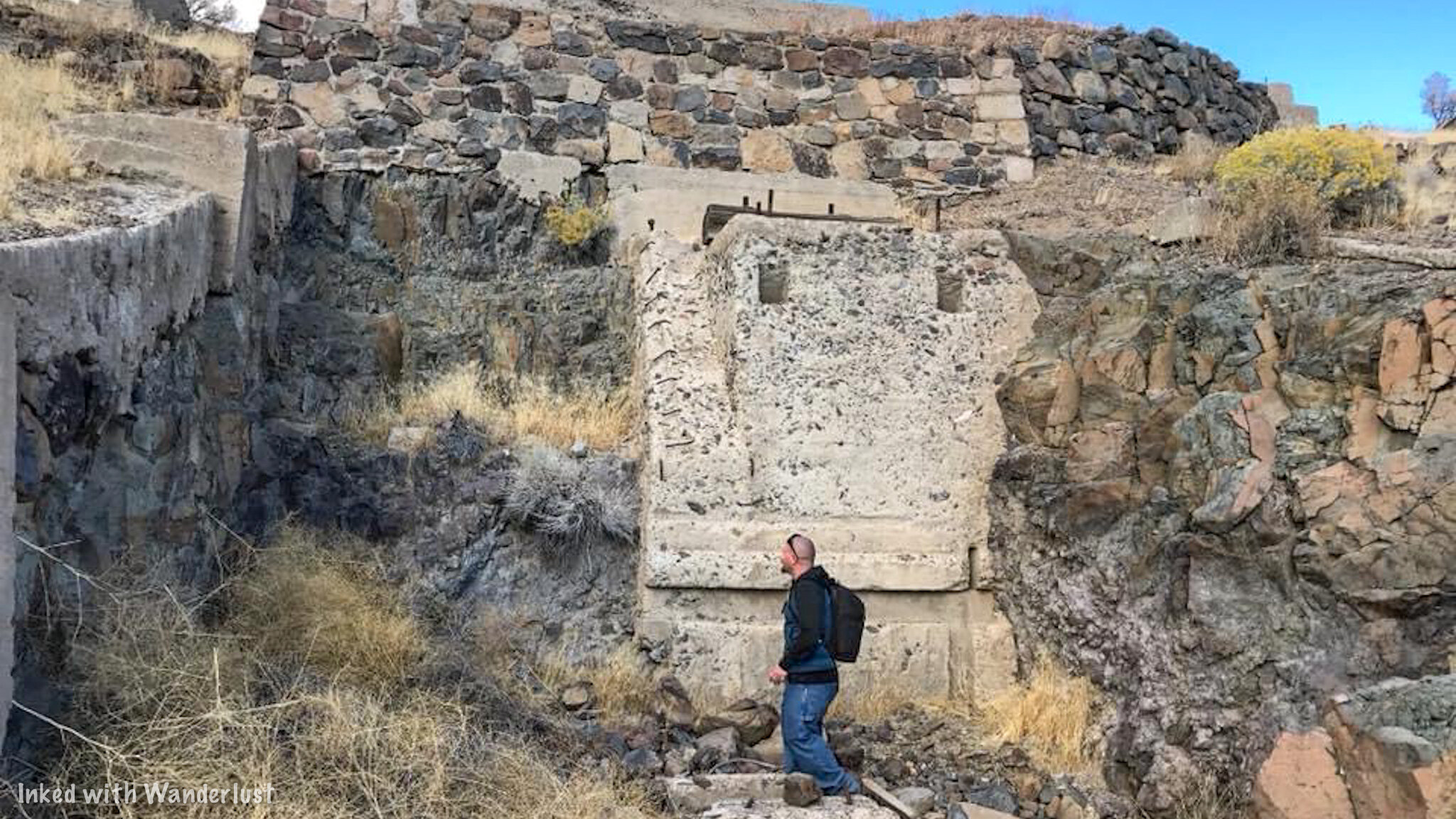
For me and many others, the main attraction of this park is the opportunity to explore the remains of Rock Point Mill, an old stamp mill that first operated in 1861, was destroyed in a fire in 1909, was rebuilt in the same year, and closed for good in 1920.
Rock Point was built by Charles C. Stevenson (who from 1887 to 1890 was Governor of Nevada) at a cost of $75,000. There were originally 40 stamps that crushed silver and gold ore from the Virginia City and Gold Hill mines but was eventually expanded to 56 at its peak.
Rock Point Mill. Dayton State Park.
As mentioned earlier, Rock Point was destroyed by a huge fire in 1909 but was almost immediately rebuilt with galvanized iron. This new version of the mill (which are what most of the remains are from) ran until its permanent closure in 1920.
You’re free to wander about the ruins at your leisure. Here you’ll find the stamp remains, mill foundations, and a small rock hole cut out in the base of the mill. It’s not much (only around 5 feet), but it is cool to see.

Rock Point Mill. Dayton State Park.
There are two ways to reach the Rock Point ruins. One way is to utilize the trail that leaves from the campground in the state park proper that runs parallel along US-50. You’ll eventually reach a tunnel that goes underneath the highway and spits you out at the ruins.

The tunnel at Dayton State Park.
If you don’t feel like walking, your other option would be to hop in your car and drive there. You’ll turn left onto US-50 from the park exit and turn right into the Gold Ranch Casino parking lot. You’ll find the entrance to this section of the park to the right of the casino.

Rock Point Mill remains. Dayton State Park.
From your car, there will be a short stroll through cottonwoods and another picnic area before reaching the ruins. The whole walk will take you around 5 minutes or so.
When to Go

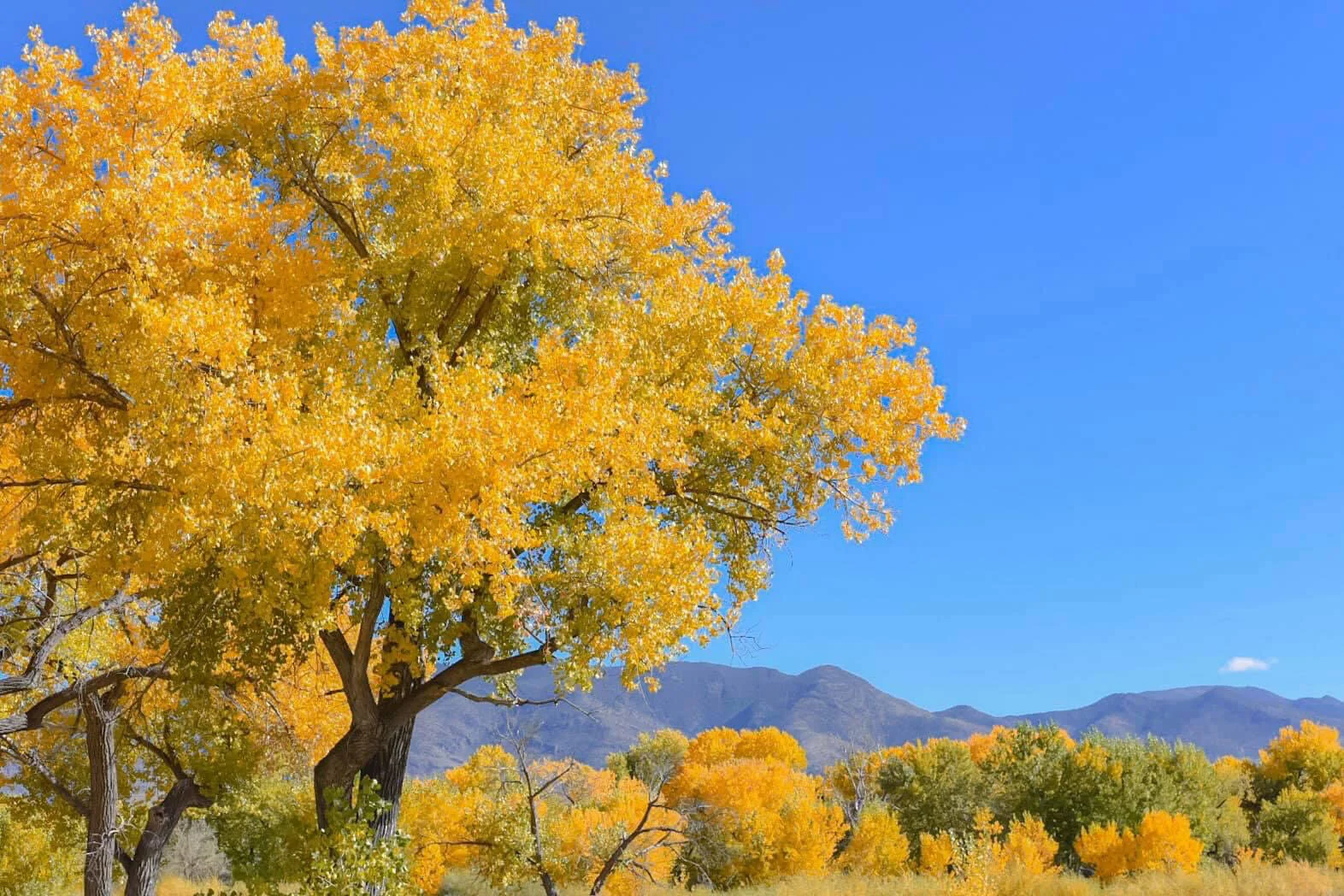
Fall colors at Dayton State Park.
The park is open 365 days a year so really, anytime is a good time. However, if you’re asking my personal opinion, I would highly recommend you pay a visit in the fall. Specifically when the fall colors are at their peak (as you can see in the photo above).
Dayton State Park, as told to me by the Ranger, is on the list for the top 10 places in the entire state for fall colors and I won’t argue with him. If you arrive at peak time, it is drop dead gorgeous.
Summer, as always, will see the most amount of visitors but even then, the park doesn’t get very busy. Chances are good that no matter when you decide to visit, you’ll be able to snag yourself a campsite and enjoy the park with minimal crowds.






Safe travels & thanks for reading!
Please support this site by sharing this article with your friends and family on Pinterest, Facebook, or your favorite social media site.
Furthermore, you can show your support by reading one or more of the related articles above. Thank you.


5 Awesome Day Trips from Reno by Car
With 4.8 million visitors in 2019 and topping 5 million for the first time in 10 years in 2018, the Biggest Little City is relevant once again and is…
Disclosure: This post contains affiliate links. If you make a purchase through these links, I may earn a small commission at no additional cost to you. I only recommend products or services that I believe will add value to my readers.
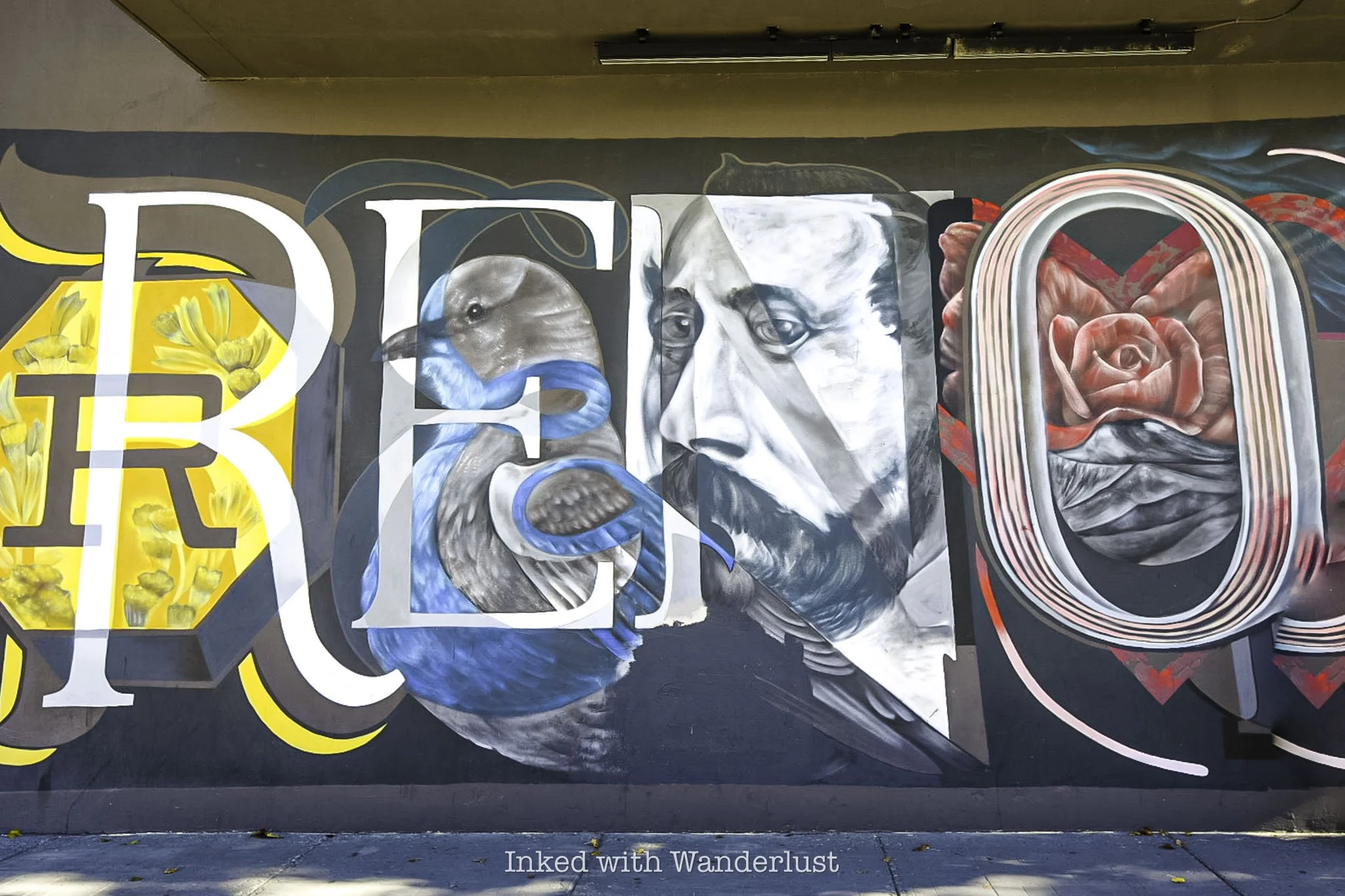
With Reno tourism on the incline year over year, the Biggest Little City is relevant once again re-claiming its reputation as a prime tourism hot spot. A plethora of hip and trendy restaurants, hiking trails, a river walk, bustling arts culture and evolving downtown, it’s never been a better time to visit Reno.
Despite there being many things to do and see in Reno, part of its appeal is its proximity to other cities and attractions. Many of which are an easy one hour or less drive from downtown. The list below is my pick of five day trips from Reno you can easily reach by car. Let’s get into it!
1) Lake Tahoe
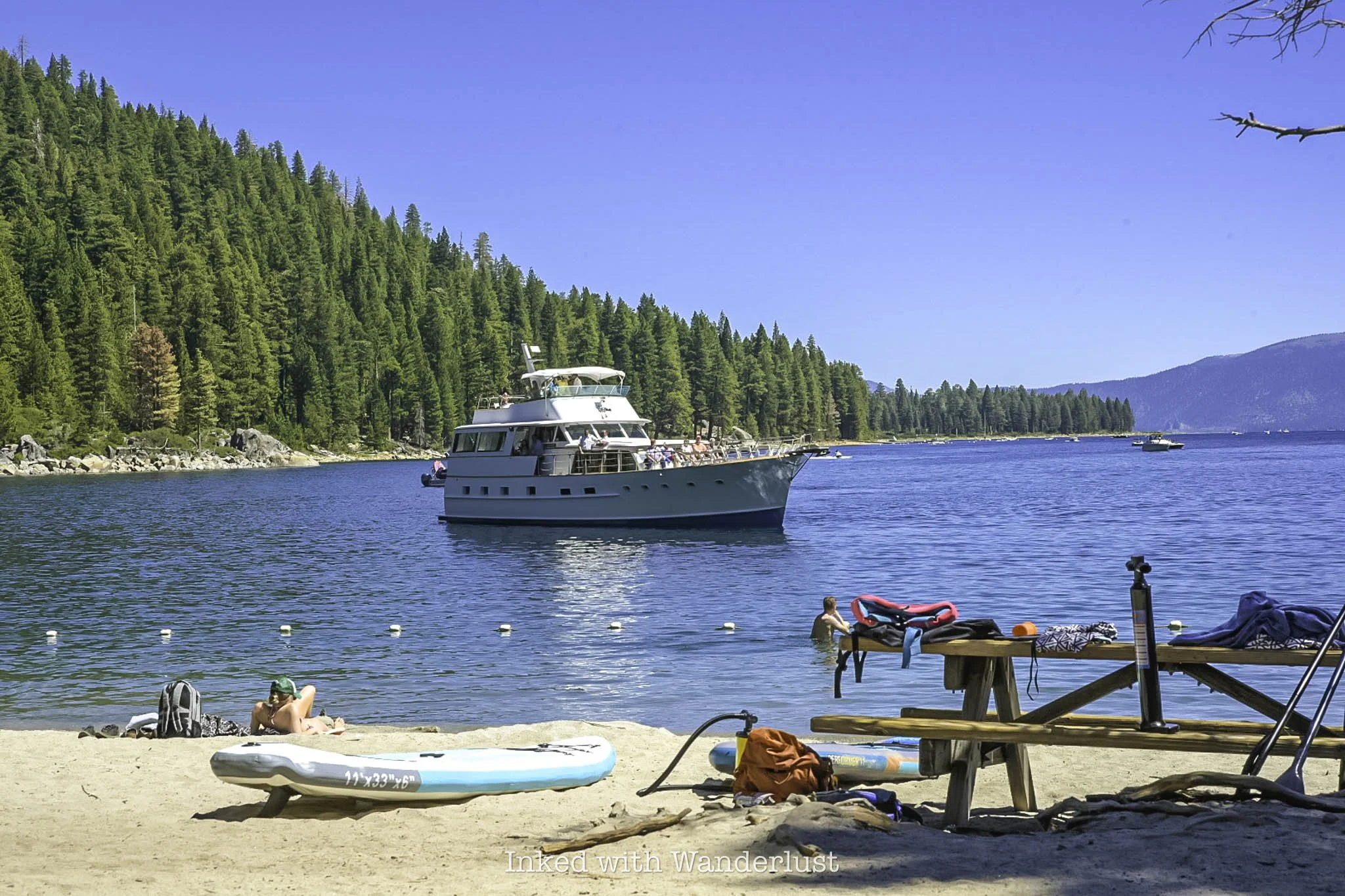
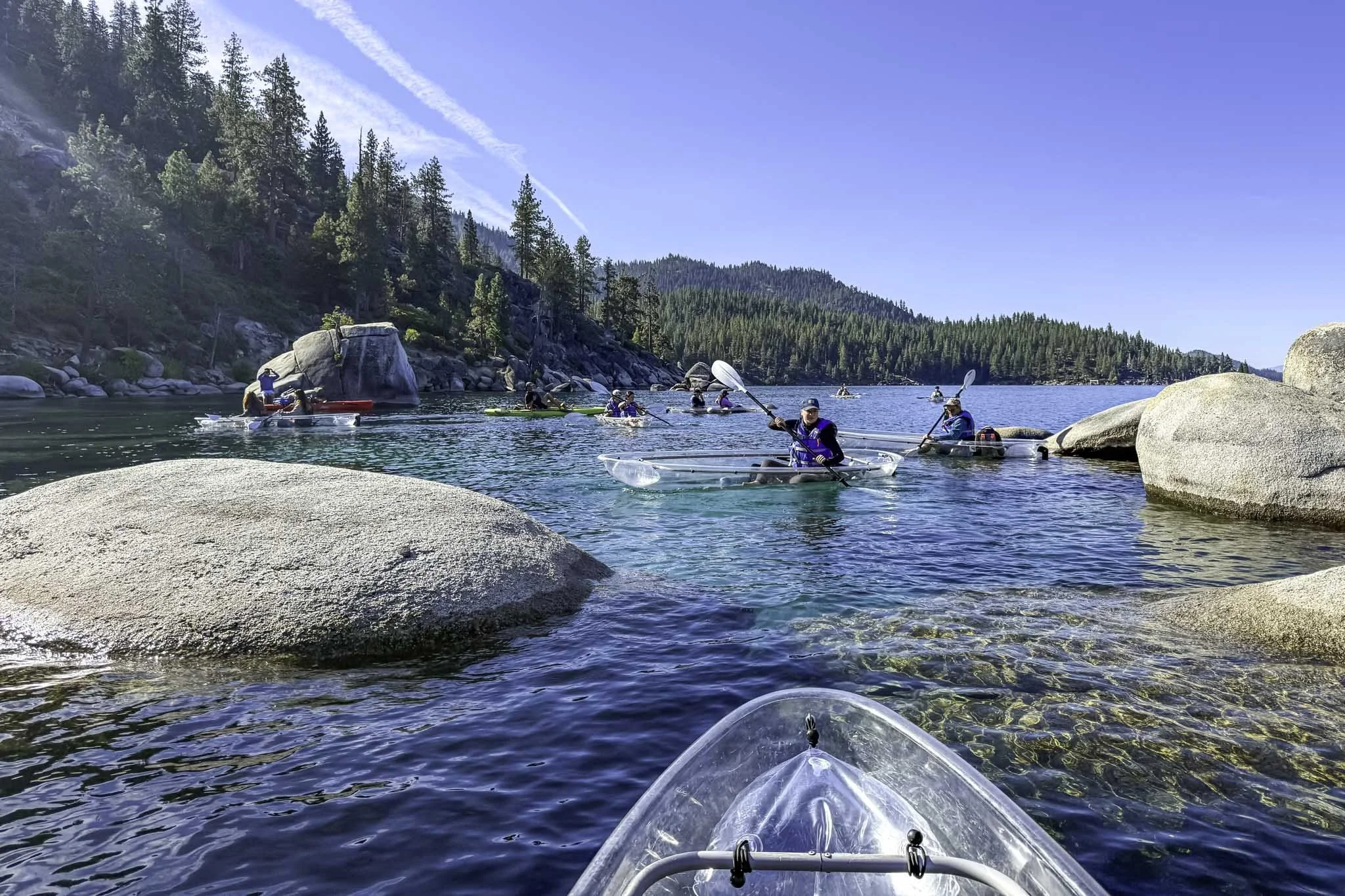
Distance from Reno: About 61 miles (or just over an hour drive away).
Lake Tahoe is a year round destination with plenty to do. There’s hiking, boating and kayaking in the summer months, with skiing taking over as the main activity in the winter. There’s the California side and Nevada side, both of which offer their own batch of activities and destinations.
Tahoe and Reno have always had a connection to one another and often share tourists. Frank Sinatra, back in the day, would often travel between them to perform, which helped bridge the gap between the two (it’s also worth mentioning that the mob had a hand in both as well).
Using Reno as your base to visiting Tahoe has its advantages as the hotels tend to be more affordable and when the weather gets bad in the winter in Tahoe, it usually isn’t as bad (or non-existent) in Reno.
A handful of my favorite destinations in Tahoe include Emerald Bay State Park, the Tahoe East Shore Trail and Round Hill Pines Beach, as well as the many beautiful waterfalls in the area.
2) Historic Downtown Truckee
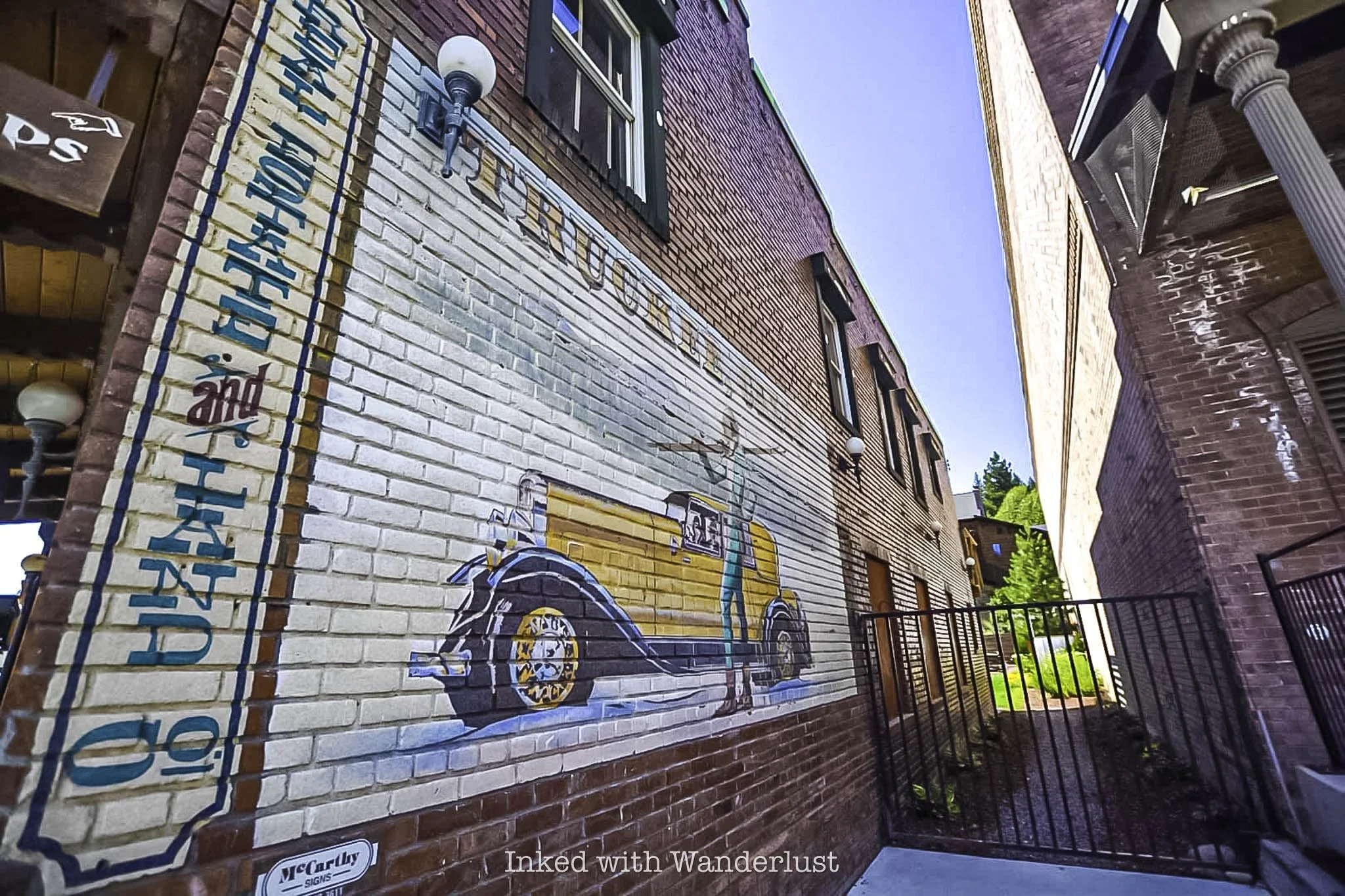
Distance from Reno: About 35 miles (or about a 40-minute drive away).
Also not far away is the historic gold-mining town of Truckee, California. Many are aloof to Truckee’s existence, often passing it by for its exceedingly more popular neighbor, Lake Tahoe. Despite that, Truckee has plenty to offer visitors all its own.
Nearby is Donner Memorial State Park and Donner Lake. The lake does get busy on certain days, but it doesn’t get nearly as bad as Tahoe. The state park proper has a visitor’s center detailing the history of the Donner Party, numerous hiking trails, Pioneer Monument and more.
The historic downtown area is the main feature, though. The area was transformed to accommodate tourists with local shops, restaurants, and the like. The historic jail is open for docent-led tours, there’s the free and historic (and still operating) train depot, and there’s a popular trail nearby where you hike through historic train tunnels!
3) Genoa, Nevada
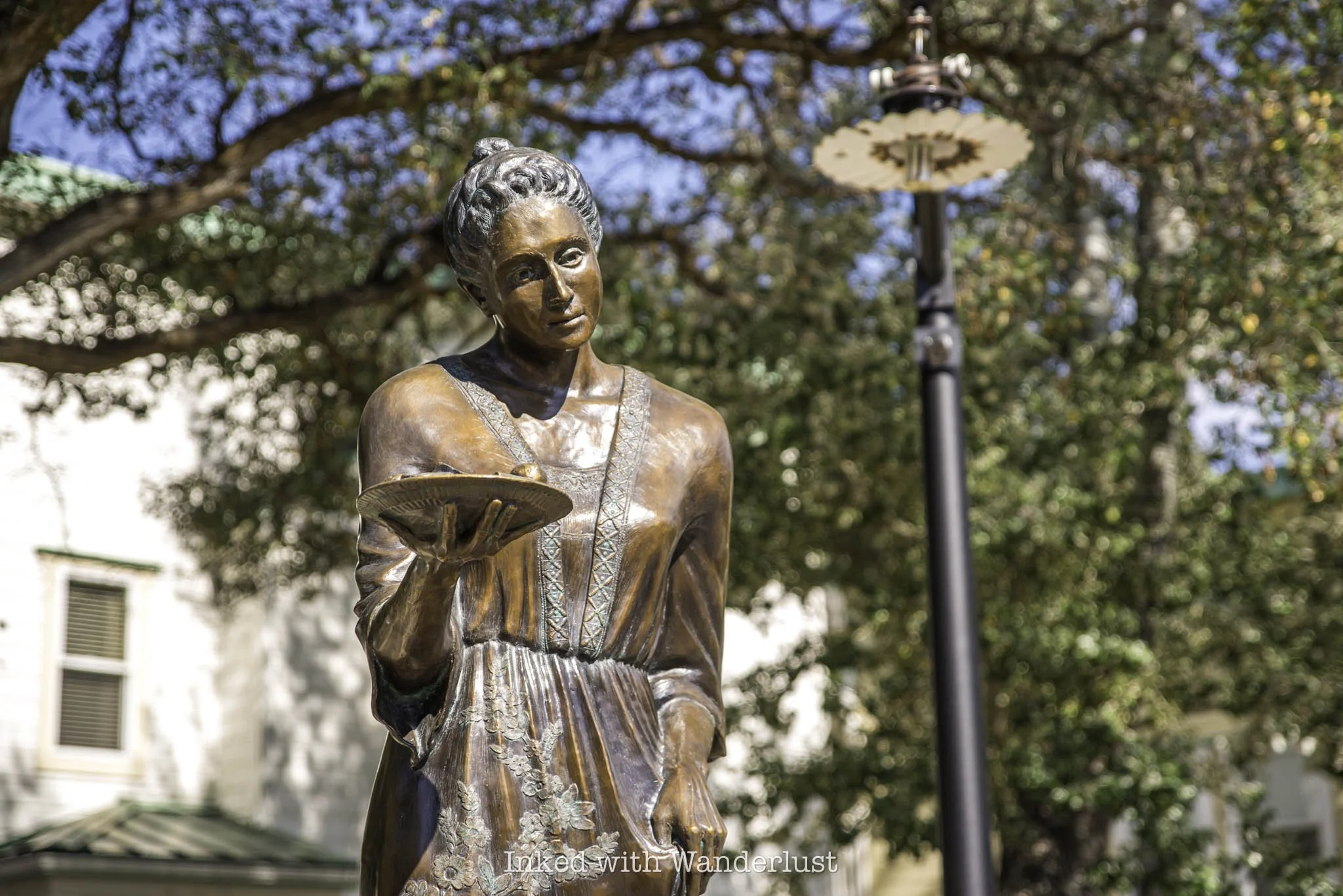
Distance from Reno: About 47 miles (or around a 50 minute drive).
Genoa is a quaint little town in Nevada is located in the beautiful Carson Valley and just a stones throw away from Tahoe. It was founded in 1851 and has the unique designation of being Nevada’s first pioneer settlement.
A man by the name of John Reese was the first to settle here. He built a trading post for the manny emigrants and trappers who were making their way through the area. It went on to become an important stop for those on their way to California.
The main attractions of the town include Mormon Station State Historic Park, the Genoa Courthouse Museum, Genoa Cemetery, and Genoa Bar, which is the oldest operating saloon in Nevada.
4) Fort Churchill State Park
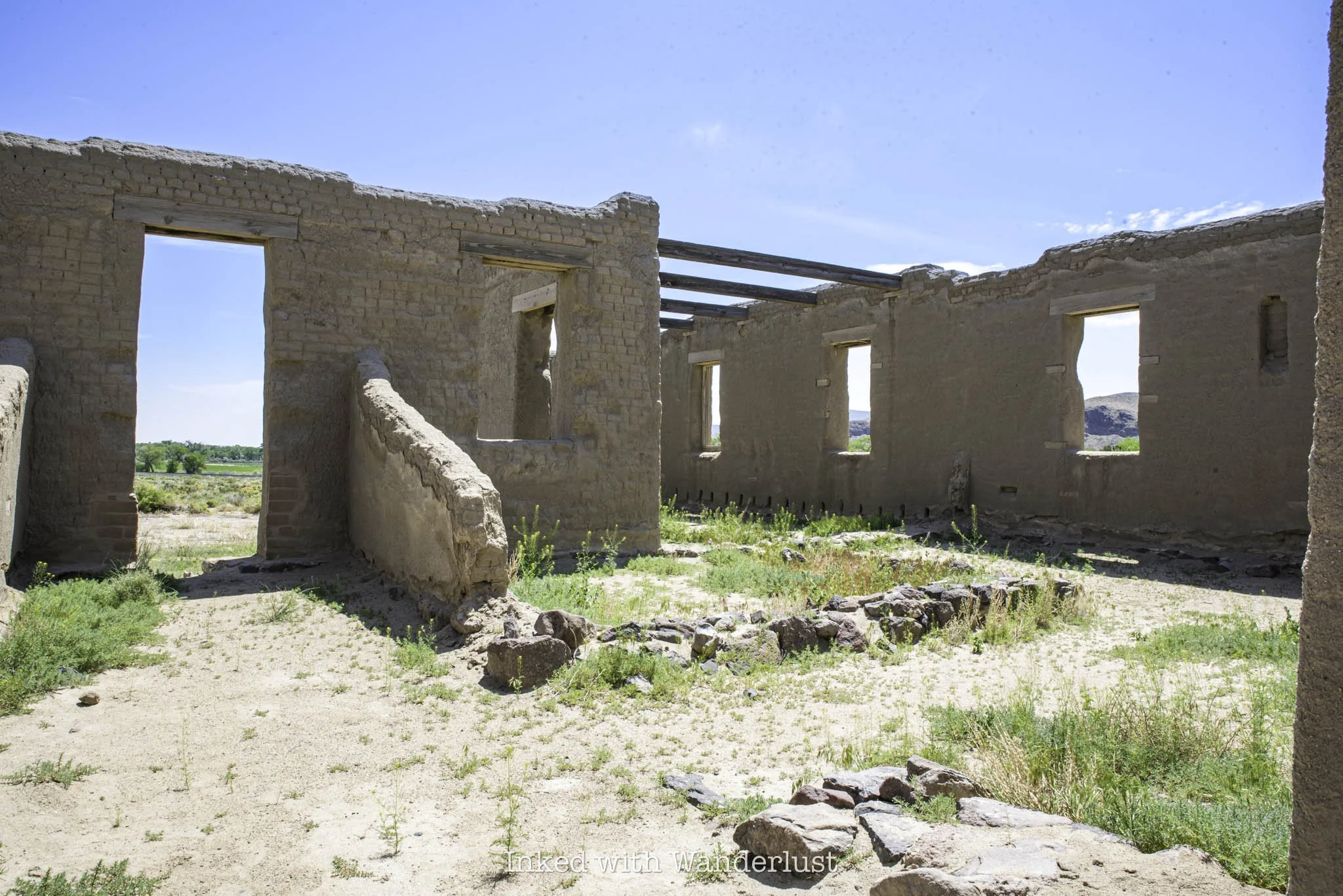
Distance from Reno: About 48 miles (or 50 minutes to one hour drive).
If you or a member of your family are history buffs, specifically military history, or you enjoy exploring abandoned places, you’ll want to add a trip to Fort Churchill to your plans. The park is located near the small town of Silver Springs and contains the remnants of an Army Post originally built in the mid 1800’s.
Another attraction nearby is Lake Lahontan State Recreation Area. Lahontan is an ancient lake that used to encompass nearly the entire state of Nevada and parts of California and Oregon. While it isn’t the gargantuan it used to be, it’s still worth checking out.
READ ALSO: Exploring Fort Churchill: An Abandoned Army Post in Nevada
5) Virginia City
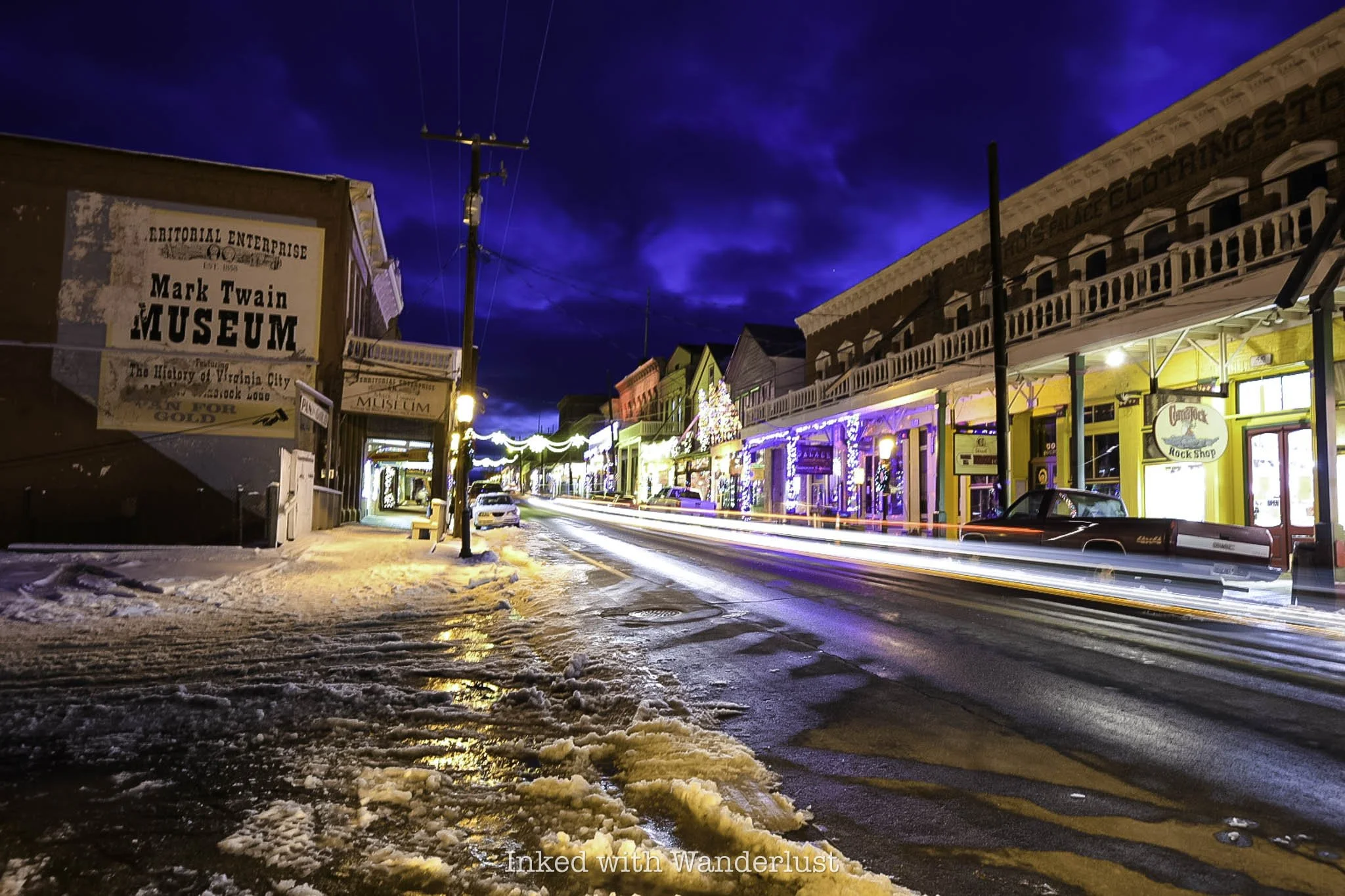
Distance from Reno: About 36 miles (or 35-40 minute drive).
Virginia City is bursting at the seams with history and is one of my favorite places to visit. One visit and I know you’ll love it too. There’s quirky shops, old town-style saloons, abandoned mine tours, a beautifully historic cemetery, historic hotels, gold panning and ghosts. Wait…what?
That’s right. Virginia City is renowned as the most haunted place in Nevada. While I’ve personally never seen one, I have had a couple of “weird” experiences that made me a believer. I’ve also been shown photographs from locals that were pretty convincing. You never know, you may end up having a spooky experience yourself.



This post was originally published in 2020 and was recently updated for accuracy.